
How to Compare ACA Marketplace Plans Beyond the Monthly Premium
Maria Turk | Nov 16 2026 14:00
Choosing an ACA Marketplace plan is about more than finding the lowest monthly premium. The right option should fit the care you expect to need, the doctors and medications you rely on, and the amount you could reasonably pay if an unexpected health event occurs. At Living Tree Financial Group, we help individuals and families in Winter Park, Florida, and throughout Central Florida review the full picture so they can make an informed decision.
Monthly cost matters, but it is only one part of health insurance. Looking at deductibles, copays, coinsurance, provider networks, prescription coverage, and possible financial assistance can help you compare ACA Marketplace plans with greater confidence.
Start With the Monthly Premium, Then Look at Total Exposure
A premium is the amount you pay each month to keep coverage active. A lower premium can be appealing, especially when managing a household budget. However, plans with lower premiums may have higher deductibles or require you to pay more when you receive care.
When comparing plans, consider both the predictable monthly premium and the costs that may arise when you use coverage. A plan that costs somewhat more each month may be worth considering if it provides lower out-of-pocket costs for the services you expect to use.
Understand the Deductible
Your deductible is generally the amount you pay for covered services before your plan begins sharing more of the cost. Not every service is always subject to the deductible. For example, many plans may cover certain preventive care without cost-sharing when received in network, while other services may have a copay before the deductible is met.
If you expect frequent appointments, testing, specialist care, or other medical services, compare the deductible carefully. Also check whether the plan has separate deductibles for medical care and prescription drugs. A deductible that seems manageable for one person may be difficult for a family when each covered member has healthcare needs.
Compare Copays and Coinsurance
Copays are fixed dollar amounts you may pay for certain services, such as a primary care visit, specialist visit, urgent care appointment, or prescription. Coinsurance is usually a percentage of the allowed cost that you pay after meeting applicable plan requirements.
Review the plan’s Summary of Benefits and Coverage for the services most relevant to your household. Look at office visits, urgent care, emergency room care, outpatient procedures, imaging, hospital care, mental health services, maternity care when applicable, and prescriptions. A plan with a familiar copay structure may be easier to budget for than one with substantial coinsurance for many services.
Pay Attention to the Maximum Out-of-Pocket Cost
The maximum out-of-pocket amount is one of the most important figures on a Marketplace plan. It is generally the most you would pay for covered, in-network essential health benefits during the plan year, not including your monthly premiums. Once you reach that limit, the plan generally pays 100% of covered in-network costs for the remainder of the year.
This number can help you evaluate the financial risk associated with a plan. Even if you are healthy today, an accident, illness, or unexpected procedure can change your healthcare spending quickly. Comparing the annual premium total alongside the maximum out-of-pocket amount can offer a more realistic view of a plan’s possible financial impact.
Check the Provider Network Before Enrolling
A provider network is the group of doctors, hospitals, specialists, clinics, and other healthcare professionals contracted with a plan. Network rules can affect both access to care and what you pay. Before selecting coverage, verify whether your preferred primary care physician, specialists, hospital system, and nearby urgent care facilities participate in the plan’s network.
It is also important to understand whether a plan requires referrals for specialist care and how it handles out-of-network services. Network availability varies by location, and even plans from the same carrier can have different networks. For people searching for health insurance in Winter Park, a plan that works well elsewhere may not include the same nearby providers in Central Florida.
Review the Prescription Drug Formulary
A formulary is the plan’s list of covered prescription medications. It usually organizes drugs into tiers, with different copays or coinsurance amounts depending on the medication’s tier. A drug may also require prior authorization, step therapy, or quantity limits.
If anyone in your household takes regular medication, review the formulary before enrolling. Confirm that the medication is covered, identify its tier, and learn whether the plan has special requirements. We also recommend checking the pharmacies available through the plan, since preferred pharmacy pricing can affect your costs.
Know What Metal Levels Actually Mean
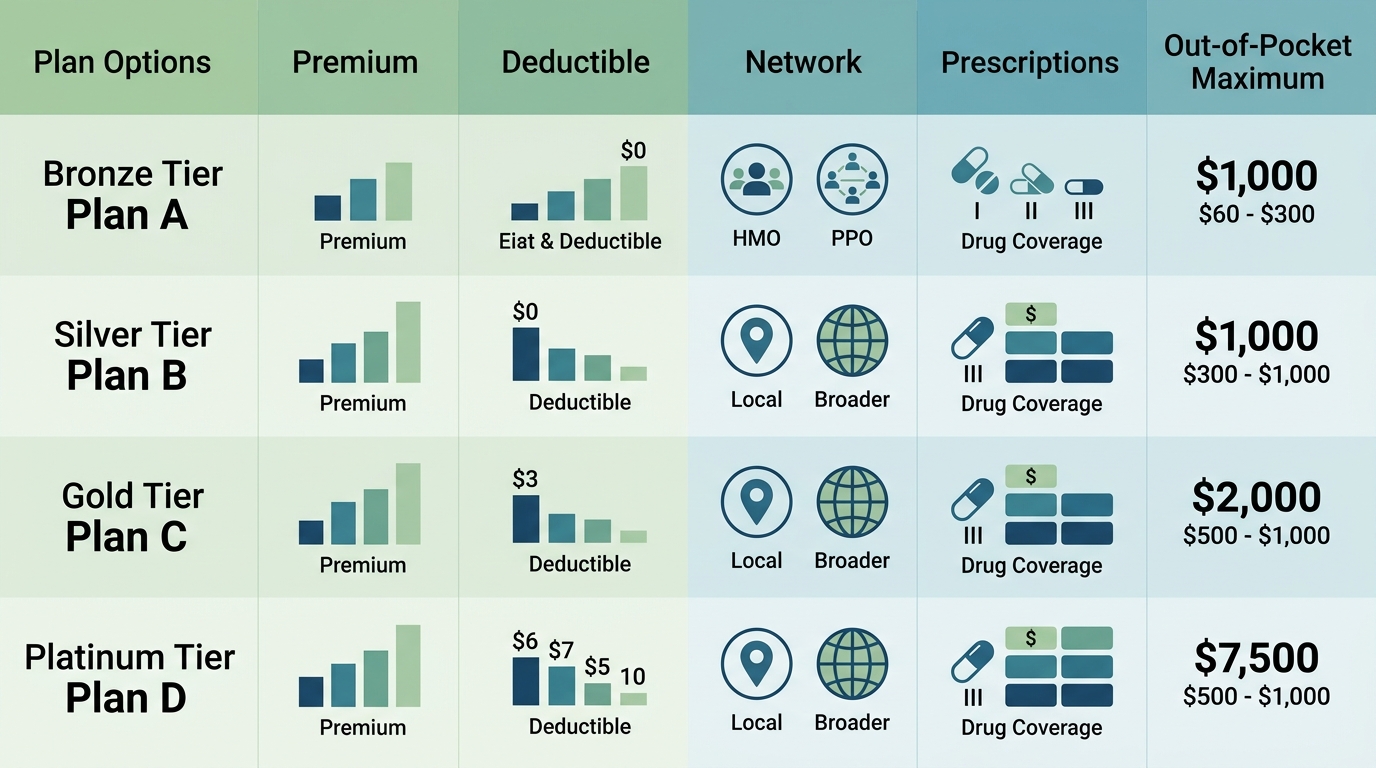
ACA Marketplace plans are commonly grouped into Bronze, Silver, Gold, and Platinum metal levels. These categories are designed to describe how costs are generally shared between the plan and enrolled members across a standard population. They do not tell you exactly what you personally will spend.
Bronze plans often have lower premiums and higher cost-sharing. Gold and Platinum plans often have higher premiums with lower cost-sharing when care is received. Silver plans can be especially important for households that may qualify for certain cost-sharing reductions, depending on income and eligibility. The best fit depends on your expected care, budget, available plans, and household circumstances—not simply the metal level on its own.
Match the Plan to Your Expected Care
Think about how your household is likely to use healthcare during the coming year. Consider regular appointments, ongoing conditions, prescription needs, planned procedures, anticipated maternity care, therapy, specialist visits, or pediatric care. It is also wise to consider how you would manage an unexpected emergency.
Someone who rarely needs care may prioritize a lower premium and a safety net for major events. A family expecting regular doctor visits or managing ongoing prescriptions may value predictable copays, a lower deductible, or a broader network. There is no universal “best” plan—only the plan that aligns most closely with your circumstances.
Explore Potential Premium Tax Credit Eligibility Carefully
Some Marketplace applicants may qualify for a premium tax credit that can reduce monthly premium costs. Eligibility and the amount of assistance can depend on factors such as household size, projected household income, filing status, access to other qualifying coverage, and where you live. Plan availability and financial assistance can vary by location and individual household circumstances.
We can help you understand how Marketplace plan options and estimated assistance may affect your comparison. However, we do not provide tax advice, and we cannot guarantee eligibility, premium amounts, or future coverage costs. For advice specific to your tax situation, consult a qualified tax professional. Living Tree Financial Group also offers tax preparation services, but Marketplace eligibility should always be evaluated using current information and the appropriate official application process.
Get Unbiased Support From a Local Insurance Team
Choosing health coverage can feel complicated, particularly when several ACA Marketplace plans appear similar at first glance. As an independent Central Florida insurance agency, Living Tree Financial Group provides personalized, unbiased guidance to help you compare available options based on what matters to you.
Our team can help you review premiums, benefits, networks, formularies, and cost-sharing details without losing sight of your broader protection needs. If appropriate, we can also discuss related coverage options such as dental and vision insurance, life insurance, annuities, Medicare insurance, Medicare Advantage, or Medigap. These products serve different needs, and our goal is to help you understand the role each may play in your overall plan.
We believe enrollment is the beginning of the conversation, not the end. Whether you are exploring coverage for yourself, your family, or a small business, our team is here to offer clear information and ongoing support.
FAQ
Is the lowest-premium ACA Marketplace plan always the best choice?
No. A low premium may come with a higher deductible, higher coinsurance, a narrower provider network, or different prescription coverage. Compare the full benefit design and your expected healthcare use before deciding.
What should I check before choosing a Marketplace health plan?
Review the premium, deductible, copays, coinsurance, maximum out-of-pocket amount, provider network, referral rules, prescription formulary, and coverage for services you expect to use. Plan details and availability can vary by location.
What is the difference between a copay and coinsurance?
A copay is typically a fixed amount for a covered service, while coinsurance is usually a percentage of the allowed cost. Both can affect what you pay when receiving care, depending on the plan’s rules and whether you have met your deductible.
Can I receive help paying for an ACA Marketplace plan?
You may be eligible for a premium tax credit or other assistance based on household and location-specific factors. Eligibility is determined through the Marketplace application process and can change as household circumstances change. We can help you review options, but we do not provide tax advice or guarantee eligibility.
How can Living Tree Financial Group help with ACA questions?
We offer personalized, unbiased guidance for individuals and families comparing health insurance options in Winter Park and across Central Florida. To discuss ACA Marketplace questions or get help reviewing available plans, contact Living Tree Financial Group at (321) 214-4594.
Need Help with a Topic
You Read About?
Still Have Questions?
If you have questions after reading one of our posts, we’re just a call or click away. Whether it’s Medicare enrollment, finding a better ACA plan, or understanding a tax credit mentioned in an article, we’ll walk you through your options.
Contact us at (321) 214-4594 or visit our Contact Page to get started.